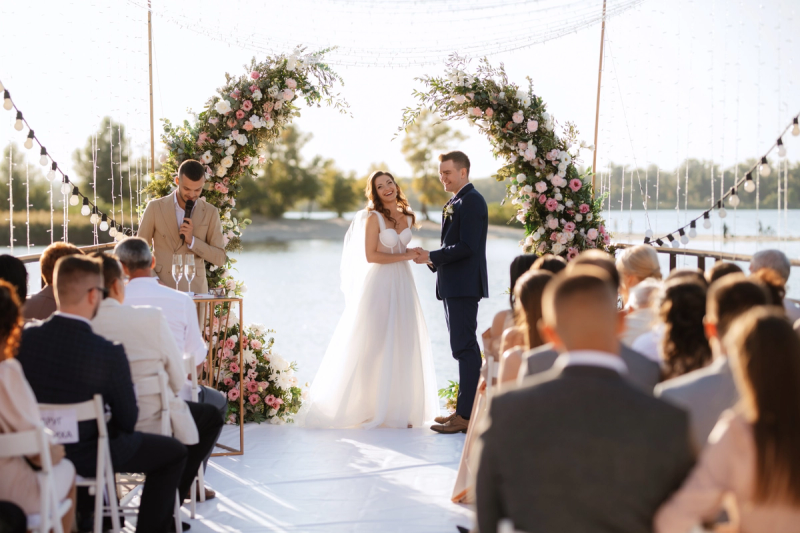
What in the world is a trend anymore? It seems like identifying just one singular trend, at least in weddings, has become a thing of the past. If you would ask for U.S. wedding trends in 2026, it all comes down to one surprising sentence: effectiveness reigns supreme and newcomers are coming for the classics.
That's not a wild guess. It’s our findings from a research conducted between January 2025 to January 2026: real couples, reserving real hotel rooms, in every U.S. market.
Rising cities like Charlotte, Kansas City, and San Diego are now fighting the mid-tier classics for wedding demand. Fall is no longer running away with the calendar. The one-day wedding is quietly becoming a multi-night event. Here are the six shifts that define how Americans are getting married in 2026, and what they mean if you're planning one.
Where Couples Are Getting Married: The Destination Trend
The 15 fastest-growing US wedding destinations of 2026
We ranked every US market by year-over-year growth in wedding room block requests, then grouped the top 15 into three growth tiers. The tier matters more than the rank, it tells you how fast demand is moving relative to hotel supply, which determines how early you need to book.
The Classics
The New Romantics
The Dark Horses
What happens when a wedding destination takes off: The Nashville Problem
With all due respect to Nashville, a decade ago, the city was the scrappy pick, an affordable, characterful alternative to bigger Southern markets. Then bachelorette culture, corporate relocations, and tourism growth hit at once. The demand curve? It snapped upward. Hotel development raced to keep up, but weekends, the only inventory that matters for weddings, stayed chronically tight. Rates followed.
What was once a value destination now carries big-market pricing, big-market minimums, and big-market booking windows. And per our research, it's still growing with a range of 350 - 400 search Volume, getting the city in the top 15 cities where couples are booking. Basically, markets that take off don't cool down, they compound. Nashville is the blueprint: every fast-growing city above is somewhere on the Nashville curve. The only question is where.
A change of place
- Southeast over Northeast: 6 of the 15 fastest-growing markets sit in the South: Charlotte, Charleston, Nashville, New Orleans, Houston, Austin, as guest lists follow a decade of population migration.
- Value metros over trophy coasts: Milwaukee, Kansas City, Philadelphia, and Houston are growing on affordability, not just because of aesthetics.
- Drive-to wine country over fly-to wine country: Temecula's surge is the clearest signal that couples want the vineyard wedding without the Napa invoice, or the flights.
When Couples Are Getting Married: The Timing Trend
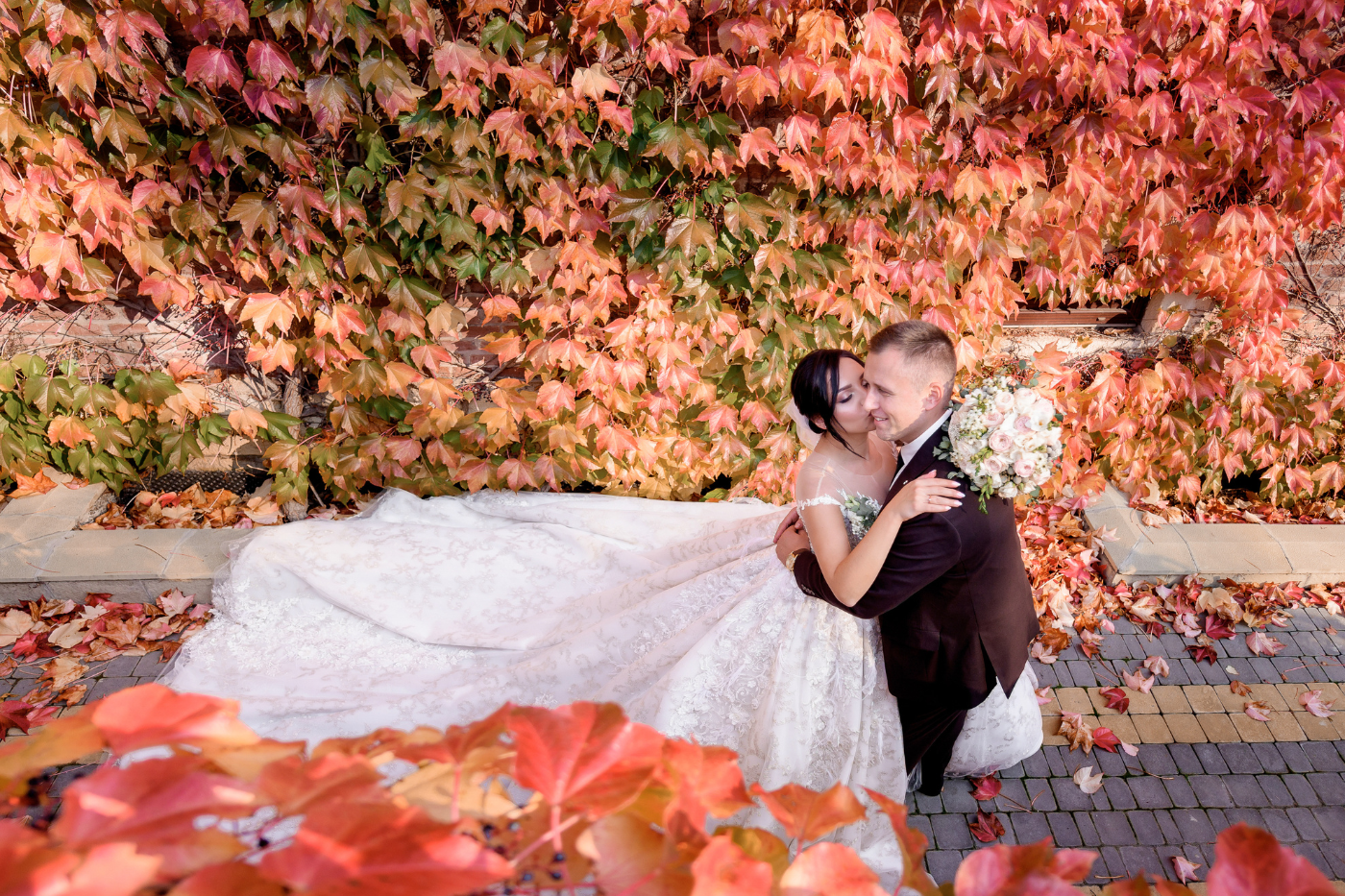
It’s hard to compete with Autumn, but…
Is October still #1?
Fall remains one of the highest points of wedding interest, but the data tells its grip is loosening. The more interesting story is when couples are booking: the request volume shows an interesting and pronounced surge between January and April, when 35% of the year's room block requests are submitted. Engagement season isn't just a jewelry-industry talking point, it's visible in hotel demand within weeks.
The rise of the shoulder season
Requests for January / April weddings grew +1210% over a year, outpacing peak-month growth. According to our research, couples are discovering what hotels have always known: shoulder dates buy better rates, better availability, and better vendor attention, at a weather cost that's often negligible.
The Sunday wedding is real now
Friday is so 2000s and late. Saturday is still the most coveted wedding day. But the wedding trend shows Sunday is becoming a couple’s darling and for good reason. How about hotel bookings being 16% less on Sundays than Fridays and Saturdays?
That hotel discount is just the beginning, choosing a Sunday wedding is a total game-changer for both your budget and your vibe. You can unlock venue savings of 20% to 35% and slash your guests' room block rates by up to 24%, easily saving thousands of dollars across the board. Plus, you'll tap into much broader vendor availability, enjoy a genuinely relaxed, unhurried atmosphere, and wrap up the weekend with an effortless Monday send-off brunch that requires almost zero extra planning.
What started as a pandemic-era budget workaround has become a deliberate strategy, Saturday scarcity in fast-growing markets is pushing couples toward days where their money and celebration goes further.
How Couples Are Getting Married: The Format Trend

The wedding weekend is the default
An interesting, and contradictory shift, is that couples are picking a weekend wedding over a single-day celebration, a counterintuitive move in an era defined by convenience, and budget pressure because of a challenging economic scenario.
But it makes sense when you look at what they're actually looking for and why it’s a wedding trend. A wedding weekend gives them real time with the people they love most: not a 30-second hug per table, not a blur they'll spend the next year trying to remember, but a full, unhurried celebration that actually sticks.
The one-day wedding is becoming the exception. Multi-day formats: welcome party, ceremony, farewell brunch, now dominate, and Sunday has emerged as the favorite day for the ceremony, as we saw just above.
Guest lists are shrinking but blocks aren't
Smaller weddings are having a moment, and the numbers back it up. The average guest count nationwide has dropped to 131 in 2024, down from 184 in 2006, according to The Wedding Report. Nearly 60% of currently engaged couples are considering a micro wedding, and the search term "micro wedding" just hit an all-time high on Google. Couples are trimming guest lists intentionally, prioritizing the people who actually matter over filling a ballroom.
But "smaller" doesn't mean simpler when it comes to hotel logistics. A 70-person destination-style wedding with 50 out-of-towners flying in for the weekend generates real, concentrated hotel demand, often more than a 150-person local wedding where most guests drive home after the reception. Fewer guests doesn't mean fewer rooms. It just means fewer people who can easily sleep in their own beds.
Multi-night stays are becoming standard
Multi-night stays are becoming standard. At destination weddings, the clearest preview of where the broader market is heading, guests already stay an average of 4 nights, according to industry data. As the wedding weekend format goes mainstream, that pattern is spreading. Couples aren't booking their guests a bed; they're booking them a weekend.
But even for couples marrying in their home town, the wedding trend of having a multi-night celebration, especially on weekends, is growing.
What Couples Are Paying: The Cost Trend

Room block rates are climbing: unevenly
U.S. hotel rates grew 1.7% year over year in 2024, the slowest pace since 2020, according to CoStar. That headline makes it sound like a stable, predictable market. It is not, at least not for wedding groups.
The national average flattens a story that is actually about where you book. In high-demand markets, group rates for wedding blocks are climbing faster than the general ADR trend. In emerging Midwest markets, they are not yet. Kansas City posted 3.5% RevPAR growth in Q1 2025. Milwaukee hit 68% occupancy with 3.2% RevPAR growth over the same period. Both are growing.
Neither has repriced the way Nashville did when leisure demand overtook supply. That gap between rising demand and stable rates is exactly what makes them the current value play for couples booking multi-night blocks.
The pattern is consistent: demand growth shows up in wedding group rates within a few booking cycles. The couples who catch a market before it tips get better rates, more negotiating room, and stronger contract terms. The ones who arrive tend to find the math has already changed.
The practical read: in fast-growing markets, the same wedding gets more expensive every quarter you wait. In steady markets, patience costs less… for now.
What This Means for Couples Planning in 2026
Six takeaways:
- Treat growth like a deadline
If your city is in Tier 1 or 2 above, book your room block 9 to 12 months out, and push to 12 to 14 in peak-season markets. Demand there is compounding, and rates follow inventory: fewer rooms available means less leverage at the table. - Book against the January to April surge
Wedding planning requests roughly double in January compared to the prior month. If you get engaged in December, you are entering the year's most crowded booking window the moment you say yes. Move early. - Consider November, March, and April seriously
October crossed into peak territory: it now accounts for 17% of all U.S. weddings and has held the top spot every year since 2019. The real shoulder window has shifted. November, March, and April offer what October used to: better rates, real availability, minimal trade-off. - Check the city's calendar, not just your venue's
SXSW in Austin, Chiefs home games in Kansas City, a major convention in Vegas: in growing markets, non-wedding events are your invisible competition for rooms. One overlap can wipe out mid-tier inventory before you even send your save-the-dates. - Plan for the weekend, not the day
Multi-night blocks unlock discounts of 15 to 25% off public rates, versus 5 to 10% for a single night. Hotels evaluate your block as a weekend package. Negotiating 2 to 3 nights upfront gets you better terms than adding nights later. - Value markets will not stay value markets
Kansas City hosts over 11,000 weddings a year and is still growing fast while holding rates. Same story in Milwaukee and Houston. That is the same profile Nashville had a decade ago, before the bachelorette boom repriced everything. The window is the opportunity.
This is the first edition of Engine's annual US Wedding Trends Report. The data resets every year: the trends don't stop. We'll be back in 2027 to report which of these shifts accelerated, which stalled, and which city becomes the next Nashville.