Somewhere out there, there is a very thorough hotel block guide written for a couple hosting 150 people at a ballroom venue on a Saturday night in October. Good for them. Genuinely. But if that is not your wedding, that guide is about as useful as a seating chart template for a party of two.
The wedding landscape has shifted considerably and the planning content has not quite caught up. Nearly 60% of currently engaged couples are considering a micro wedding, according to The Knot. Smaller celebrations of 50 guests or fewer made up 18% of all US weddings in 2024, up from just 10% in 2013. Destination weddings account for roughly 20% of all US weddings annually. These are not fringe choices made by couples who could not figure out how to plan a real wedding. They are how a significant and growing share of couples are choosing to get married, on purpose, with intention.
The hotel block conversation looks completely different depending on which category you are in. A 25-person micro wedding and a 65-person weekend celebration in the Riviera Maya share almost nothing in terms of block type, room count, timing, or negotiation strategy. This guide gives each format the specific guidance it actually deserves, so you can skip the parts that do not apply and get directly to the ones that do.
Which Wedding Type Are You?
Four wedding formats. One of them is yours. If you already know which, skip ahead. If you are still deciding, the quiz below will get you there faster than another hour on Pinterest.
The Four Types and How to Tell Them Apart
Micro wedding: 50 guests or fewer. Full ceremony and celebration, just scaled down. The fastest-growing format in the industry right now, up 29% globally between 2023 and 2025, and "micro wedding" just hit an all-time high on Google Search. Hotel block strategy here is simpler than most couples expect.
Intimate wedding: 50 to 75 guests. The format that sits between a micro and a traditional wedding. More out-of-towners than a micro typically generates, fewer than a large reception. The hotel block decision here is the most nuanced of the four formats.
Mid-size traditional: 75 to 150 guests. The national average sits at 117, according to The Knot's 2024 data. This is the format most hotel block guides are written for. The standard contracted block playbook applies, but overblocking remains the most common mistake.
Destination wedding: Defined by geography, not guest count. The average destination wedding has 65 guests, but the difference from a local wedding of the same size is the multi-night stay. Guests at destination weddings stay an average of 4.5 nights. That changes every calculation.
The Micro Wedding Hotel Block
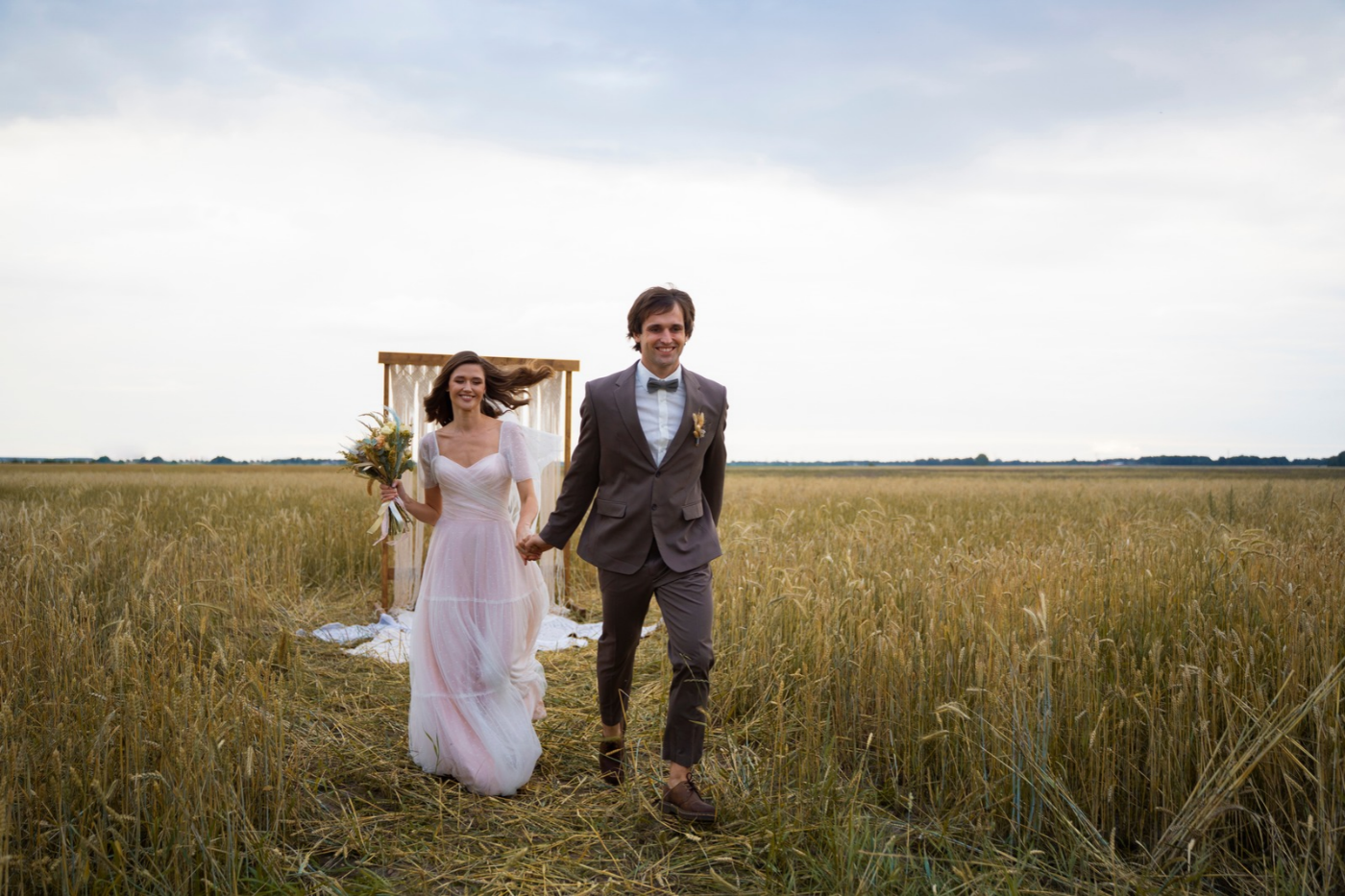
A new bombshell enters the villa. And that’s the micro wedding. The most Googled wedding format of the moment, and the one with the least relevant hotel block guidance available. Let's fix that.
Does a Micro Wedding Even Need a Hotel Block?
Honest answer: it depends on how many of your 50 or fewer guests are actually traveling. Here is a clean way to think about it:
Fewer than 10 out-of-town guests: Skip the formal block. A curated list of two or three nearby hotels linked on your wedding website does the job. No contracts, no cutoff dates, no attrition clauses. Just useful information for the guests who need it.
10 to 20 out-of-town guests: This is the courtesy block sweet spot. Most hotels will hold 8 to 12 rooms at a discounted rate with zero financial obligation for the couple. If guests fill the rooms, great. If they do not, the rooms release quietly at the cutoff date and you owe nothing. There is almost no reason not to do this.
More than 20 out-of-town guests at a micro wedding: This is where the block matters most and where couples most often underestimate its value. A small guest list with concentrated travel needs means the hotel experience is an outsized part of the overall weekend. Getting everyone in the same building, or at minimum on the same block, is genuinely achievable at this scale in a way that is much harder with 150 people.
The Courtesy Block Is Almost Always the Right Call
Here's a fun fact hotels won't put on the brochure: most contracted blocks want a 10-room minimum plus an attrition clause that can leave you paying for empty beds long after the last dance. For a 30-person micro wedding with 15 travelers, that's a lot of financial risk for a crowd that would probably fit in one very enthusiastic Airbnb. So skip the contracted block. The courtesy block practically invented itself for exactly this.
The courtesy block gives you the group discount, the dedicated booking link, and the convenience your guests need, without putting you on the hook for rooms that go unfilled. For a micro wedding, this is almost always the right structure.
What to ask for in the courtesy block conversation: a rate that is at least 10 to 15% below the hotel's public rate for your dates (the platform median across all confirmed bookings is 19% off), late checkout for the couple's room, and a dedicated booking link rather than a phone number. Guests who have to call to book do not book.
What Kind of Hotel Works Best for a Micro Wedding
While everyone else is fighting over ballroom minimums, you get to book the boutique hotel with the rooftop terrace that only holds 30.
Boutique hotels and smaller independent properties tend to suit micro weddings better than large chains. They have more personality, more attentive service, and more willingness to treat a small block as meaningful business because for them it is. A 12-room block is not a rounding error at a 40-room boutique hotel the way it is at a 400-room Marriott.
- A complimentary hospitality suite. A living room suite, private dining room, or rooftop space becomes your welcome party venue at no extra cost. Ask for it explicitly when requesting the block. The worst answer is no.
- True proximity. With 25 to 30 guests, everyone in the same building or within a two-minute walk is genuinely achievable. Guests run into each other in the lobby. The morning-after coffee happens naturally. The community that makes a micro wedding feel different does not need a program to create itself.
The Micro Wedding Block by the Numbers
- Rooms to block:8 to 15 for most micro weddings with meaningful out-of-town attendance. Based on the standard sizing formula: 20 to 25 out-of-town guests at a 70% booking rate, divided by average room occupancy of 2, plus a 10% buffer.
- Block type:Courtesy in almost all cases. Most hotels require a 10-room minimum to open a contracted block with attrition terms (Teach Travel Discover, Eventpipe). Ask about contracted only if you have 20 or more confirmed traveling guests and strong confidence in your fill rate.
- When to book:6 to 9 months out for most off-peak markets and smaller guest counts. Push to 9 to 12 months for peak season dates (May to October) or in-demand destination cities where inventory moves faster than couples expect.
- Nights to cover:1 to 2 nights for a local micro wedding where most guests are driving distance. If the format is destination-style with guests flying in, the multi-night rules from the destination section apply.
The Intimate Wedding Hotel Block
- prompted. Ask for it explicitly every time.
- Standard hotels at domestic or European destinations: More familiar block mechanics, but with multi-night complexity layered on top. Rate is per room per night. Attrition terms apply. The negotiation looks like a local contracted block, except you are negotiating for 3 to 5 nights instead of 1 to 2, which means the financial exposure on an unfavorable attrition clause is proportionally larger. Every point of negotiation matters more here.
How Many Rooms, How Many Nights
The formula for destination weddings:50 to 75 guests. Just 14% of all US weddings land here, according to Zola, which makes this the most underserved format in the entire hotel block conversation.
Too big for the casual courtesy block world of a micro wedding, not quite big enough to unlock the best contracted block rates. More decisions to make, more nuance required, and almost zero planning content written specifically for it.
Until now.
Courtesy or Contracted: The Decision That Actually Matters
At 50 to 75 guests, an intimate wedding typically generates 20 to 35 travelers. That is the range where both block types are genuinely in play, and the right choice depends on one question: how confident are you in your numbers?
If RSVPs are still settling: Start with a courtesy block. You get the group rate, the booking link, and zero financial risk while your headcount firms up. Ask the hotel whether you can convert to a contracted block later if pickup is strong and you want access to deeper discounts.
If you have firm RSVP numbers and know your out-of-town count: A contracted block unlocks better rates (the platform median is 19% off the published rate, with larger blocks hitting 20 to 25%) and more leverage on concessions like late checkout and breakfast rates. Size conservatively, negotiate attrition to 70 to 75%, and include a mitigation clause.
The deciding factor is not the guest count. It is the predictability of your specific guest list. An intimate wedding where both families live within driving distance has a very different out-of-town profile than one where the couple met at a university in a different state and their guest list is scattered across five cities.
Room Count, Timing, and the Two-Hotel Question
- Block rooms for 50 to 60% of confirmed out-of-town guests. Not invited guests. Not RSVPs that say "planning to come." Confirmed. (Engaged Sourcing) At 50 to 75 guests, this typically means 15 to 25 rooms for the primary hotel.
- Book 8 to 10 months out. Intimate weddings often use non-traditional venues, converted barns, boutique event spaces, art galleries, private estates, that cluster in specific neighborhoods. The good hotels near those venues move on peak weekends faster than couples expect.
- On the two-hotel question: at 50 to 75 guests, offering two hotel options at different price points is worth considering, particularly if your guest list spans a wide range of budgets. A primary block of 15 to 20 rooms at the venue-adjacent property, and a secondary courtesy block of 8 to 10 rooms at a lower-price-point option within 15 minutes, reduces the number of guests who book outside the block entirely because the one option on offer does not fit their budget.
The Destination Wedding Hotel Block
Get in, loser, we’re going to a destination wedding! Everything you know about hotel blocks from the formats above still applies. And then there are about six more things you need to know specifically for this format.
Why Destination Wedding Blocks Are a Different Animal
Destination weddings typically average 50 to 70 guests, according to data from Destify and Condor Ferries. The average destination wedding guest stays 4 to 5 nights. At an average accommodation cost of $300 to $350 per person per night, which reflects standard all-inclusive resort pricing where guests are charged individually rather than by room, that math lands somewhere around $95,000 in total guest accommodation spend across the weekend. Not a logistical footnote. The financial center of your guests' entire experience of your wedding.
For destination weddings, the hotel block is not a convenience. It is the operational infrastructure of the weekend. Guests who are scattered across three different properties in an unfamiliar city, without a shuttle, without a common gathering point, without a group rate that made the trip feel financially manageable, are guests who are stressed before the ceremony even starts.
60 to 70% of destination wedding invitees actually attend, according to Destify. That is already lower than a local wedding. The ones who do make the trip are fully committed. Your job is to make the logistical experience worthy of that commitment. The block is where that starts.
All-Inclusive vs. Standard Hotel: Two Very Different Conversations
The type of property you are booking determines everything about how the block conversation goes.
- All-inclusive resorts in Mexico, the Caribbean, and Jamaica: Room blocks are often bundled directly into the wedding package. The negotiation is not about nightly rate in the traditional sense — it is about per-person package pricing, minimum night stays (3 to 4 nights is standard, some push to 5 during peak season), and what is included. One free room per 20 room nights booked is a standard concession at resort properties and one that is almost never offered un
- Step 1: Take your out-of-town invitee count. For a destination wedding, this is almost everyone.
- Step 2: Multiply by your expected attendance rate. Use 60 to 70% as a baseline (Destify). If your crowd is well-traveled and your destination is easy to reach, use 70%. If guests are widely dispersed and the trip is a significant undertaking, use 60%.
- Step 3: Divide by 2 for average room occupancy. Most guests travel as couples.
- Step 4: Add a 10% buffer. Block that number at the primary property.
On nights: block for 3 to 5 nights minimum. Guests who flew internationally or across multiple time zones are not leaving after one night. Most destination wedding guests arrive one day before the wedding and stay at least one day after. Build the block to reflect that, not the single-night scenario.
Primary and secondary blocks: For mid-size destination weddings, 15 to 25 rooms at the main venue-adjacent property and 10 to 15 rooms at a nearby lower-price-point option works well. It gives guests real choice, reduces the number who book outside the block on budget grounds, and keeps the group reasonably concentrated. (BeachBride)
Book Earlier Than You Think You Need To
Twelve to 14 months minimum for destination markets. Popular resort properties in Mexico, Italy, and Hawaii book out a full year in advance on prime season weekends. This is not a guideline. It is a capacity reality.
The rate window at destination properties is also shorter than at domestic hotels. In high-demand resort markets, the rate quoted at first inquiry has a shelf life measured in weeks, not months. Moving from inquiry to signed contract faster than you would for a local wedding block is not urgency for its own sake. It is the difference between the rate you saw and whatever is left when you come back three months later.
The Mid-Size Traditional Wedding Block
75 to 150 guests. The national average. The format every other hotel block guide was written for. This section is shorter because the standard playbook exists and largely works. The goal here is not to repeat it but to flag where mid-size wedding couples specifically go wrong.
Standard Playbook, Done Right
Contracted block. Attrition standard opens at 80 to 90%. Negotiate it to 70 to 75% before signing. Add a mitigation clause and a slippage window of 30 to 60 days. Block rooms for 50 to 60% of confirmed out-of-town guests. Book 9 to 12 months out, 12 to 14 for peak season and high-demand markets. One primary hotel within 15 minutes of the venue, secondary option if your budget range is wide.
That is the summary. The details are in the pieces linked below.
Where Mid-Size Weddings Specifically Go Wrong
Overblocking. The most common and most financially consequential mistake at this size. The guest count is large enough to feel like it justifies an ambitious block and small enough that a meaningful share of guests will quietly make other arrangements. Block for the guests who will actually use it, not the ones you hope will. A 30-room block filled to 95% is better than a 50-room block filled to 70% by a wide margin.
Communicating the block too late. At 100 to 150 guests, the block link needs to be in the save-the-dates. Not the invitations. Not a follow-up email three months before the wedding. Save-the-dates, with the cutoff date visible, so guests have the maximum possible window to book before they have already made other plans.
For the full mid-size wedding block breakdown, the attrition math, and what the data shows about where these blocks succeed and fail, see The Ghost Block Report and What 80,000+ Requests Reveal About How to Choose the Right Hotel.
Side-by-Side: Hotel Block Quick Reference
Please, let’s give a round of applause for this simple comparison for couples? The same information, all four formats, one table. The most useful thing to screenshot before your first hotel conversation.